

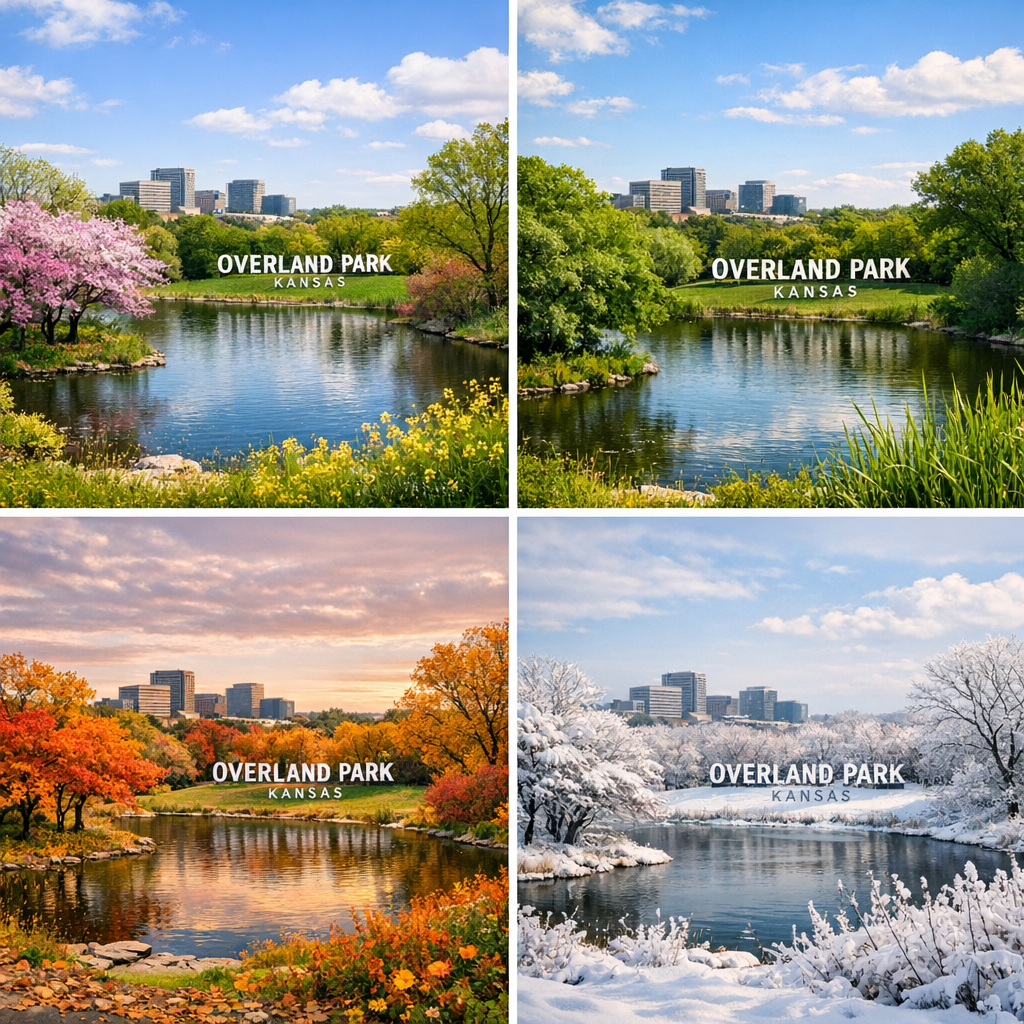
Overland Park, Kansas, experiences a humid continental climate characterized by hot summers and cold winters. Understanding these patterns can help residents prepare for seasonal changes and make the most of the city’s diverse weather.
Seasonal Overview
Winter (December – February)
During winter, average temperatures range from the mid-20s°F to lower 40s°F. Monthly precipitation, including snowfall, averages about 1.5 inches. It’s advisable to dress in layers and have winter essentials like coats, gloves, and waterproof boots ready.
Spring (March – May)
Spring brings gradual warming, with temperatures rising from the mid-50s°F in March to the mid-70s°F by May. Rainfall increases during this season, averaging between 2.5 and 4.5 inches per month. A light jacket and rain gear are recommended for outdoor activities.
Summer (June – August)
Summers are warm and sunny, with average highs in the upper 80s°F and lows in the upper 60s°F. Staying hydrated and wearing light clothing can help manage the heat.
Fall (September – November)
Fall sees temperatures cooling from the upper 70s°F in September to the mid-50s°F by November. This season offers comfortable weather for outdoor activities, with moderate rainfall.
Environmental Considerations
Overland Park is committed to sustainability and offers various programs for residents:
- Energy Use: Utilizing renewable energy sources, such as solar panels, can lead to utility savings and a healthier environment.
- Waste Management: The city provides opportunities to divert waste from landfills through events and programs.
- Water Pollution Prevention: Residents are encouraged to prevent contaminants from entering waterways by properly disposing of waste and maintaining vehicles to avoid leaks.
By understanding Overland Park’s climate and participating in local environmental initiatives, residents can enhance their quality of life and contribute to a sustainable community.